
 The World's Healthiest Foods are health-promoting foods that can change your life.
Try our exciting new WHFoods Meal Plan.
The World's Healthiest Foods are health-promoting foods that can change your life.
Try our exciting new WHFoods Meal Plan.
For serving size for specific foods see the Nutrient Rating Chart.
Vitamin B1, also known as thiamin, is classified as a B-complex vitamin. Very small amounts of vitamin B1 are found in virtually all foods, and many commonly eaten foods contain substantial amounts. For example, 50/100 of our WHFoods rank as good, very good, or excellent sources of B1. In this context, it might seem odd that deficiency of vitamin B1 is among the more common nutrient deficiencies in the U.S.
Yet there is a very simple reason for this high risk of deficiency despite the widespread availability of vitamin B1 in foods, and that reason is food processing. Vitamin B1 is among the nutrients most prone to destruction by our modern food production system. At each step along the way, from storage though refining up through cooking, we lose a big portion of the vitamin B1 content of foods. We'll detail this more in the Impact of Cooking, Storage, and Processing section below.
For these reasons, vitamin B1 makes a good case study for the wisdom of the World's Healthiest Foods approach of minimal processing and low impact cooking techniques.
Of the foods listed on our site, we have one excellent source of vitamin B1 (asparagus), 10 very good sources, and 39 good sources. All of the World's Healthiest Foods, with the exceptions of a few spices and sweeteners, contain at least some vitamin B1. We have 61 recipes with more than one quarter of the Dietary Reference Intake (DRI) for vitamin B1. Two examples are Healthy Turkey Salad and Sauteéed Mushrooms With Green Peas.
Like the other B vitamins, B1 is a key player in the production of energy from dietary carbohydrates and fats. In fact, you could easily make the case that vitamin B1 plays the most critical role of all, acting as the gate keeper between the less efficient step of early carbohydrate breakdown and the very energy-rich Krebs' cycle and electron transport chain.
Because of the central role of vitamin B1 to energy metabolism, deficiency of this nutrient impairs nearly every important function in the body. Severe and prolonged vitamin B1 deficiency—rare in the United States—has been reported to affect the nervous system, the heart, and digestive function, among other areas.
The brain is one of the most energy hungry tissues in the human body. As such, it shouldn't be a surprise to see vitamin B1 deficiency commonly leading to problems in the nervous system. The only surprise may be that this vitamin has been linked to so many varied conditions, from alcohol-related brain disease to Alzheimer's and Parkinson's diseases.
In addition to its role in energy production, vitamin B1 plays a key role in the structure and integrity of the cells of the brain. If the deficiency is very advanced, or occurs at a critical period of brain development, the damage can be quite severe.
As a rule of thumb, legumes and vegetables are the richest whole food sources of vitamin B1. Nuts and seeds can also be concentrated in vitamin B1. Below are some further details about vitamin B1 and the World's Healthiest Foods.
Many of the World's Healthiest vegetables rank as good sources of vitamin B1. These vegetables include broccoli, onions, green beans, summer squash, carrots, kale, and tomatoes. More nutrient-rich and ranking as very good sources of vitamin B1 are green peas, beet greens, Brussels sprouts, spinach, cabbage, eggplant, romaine lettuce, and crimini mushrooms. And topping our WHFoods list as an excellent source of B1 is asparagus.
Very good sources of vitamin B1 in the seeds group include sunflower seeds and flax seeds. Good sources in the legume group include navy, black, pinto, lima, and kidney beans, as well as lentils and dried peas.
| World's Healthiest Foods ranked as quality sources of vitamin B1 |
||||||
|---|---|---|---|---|---|---|
| Food | Serving Size |
Cals | Amount (mg) |
DRI/DV (%) |
Nutrient Density |
World's Healthiest Foods Rating |
| Asparagus | 1 cup | 39.6 | 0.29 | 24 | 11.0 | excellent |
| Sunflower Seeds | 0.25 cup | 204.4 | 0.52 | 43 | 3.8 | very good |
| Green Peas | 1 cup | 115.7 | 0.36 | 30 | 4.7 | very good |
| Flaxseeds | 2 TBS | 74.8 | 0.23 | 19 | 4.6 | very good |
| Brussels Sprouts | 1 cup | 56.2 | 0.17 | 14 | 4.5 | very good |
| Beet Greens | 1 cup | 38.9 | 0.17 | 14 | 6.6 | very good |
| Spinach | 1 cup | 41.4 | 0.17 | 14 | 6.2 | very good |
| Cabbage | 1 cup | 43.5 | 0.11 | 9 | 3.8 | very good |
| Eggplant | 1 cup | 34.6 | 0.08 | 7 | 3.5 | very good |
| Romaine Lettuce | 2 cups | 16.0 | 0.07 | 6 | 6.6 | very good |
| Mushrooms, Crimini | 1 cup | 15.8 | 0.07 | 6 | 6.6 | very good |
| Navy Beans | 1 cup | 254.8 | 0.43 | 36 | 2.5 | good |
| Black Beans | 1 cup | 227.0 | 0.42 | 35 | 2.8 | good |
| Barley | 0.33 cup | 217.1 | 0.40 | 33 | 2.8 | good |
| Dried Peas | 1 cup | 231.3 | 0.37 | 31 | 2.4 | good |
| Lentils | 1 cup | 229.7 | 0.33 | 28 | 2.2 | good |
| Pinto Beans | 1 cup | 244.5 | 0.33 | 28 | 2.0 | good |
| Lima Beans | 1 cup | 216.2 | 0.30 | 25 | 2.1 | good |
| Oats | 0.25 cup | 151.7 | 0.30 | 25 | 3.0 | good |
| Sesame Seeds | 0.25 cup | 206.3 | 0.28 | 23 | 2.0 | good |
| Kidney Beans | 1 cup | 224.8 | 0.28 | 23 | 1.9 | good |
| Peanuts | 0.25 cup | 206.9 | 0.23 | 19 | 1.7 | good |
| Sweet Potato | 1 cup | 180.0 | 0.21 | 18 | 1.8 | good |
| Tofu | 4 oz | 164.4 | 0.18 | 15 | 1.6 | good |
| Tuna | 4 oz | 147.4 | 0.15 | 13 | 1.5 | good |
| Pineapple | 1 cup | 82.5 | 0.13 | 11 | 2.4 | good |
| Oranges | 1 medium | 61.6 | 0.11 | 9 | 2.7 | good |
| Broccoli | 1 cup | 54.6 | 0.10 | 8 | 2.7 | good |
| Green Beans | 1 cup | 43.8 | 0.09 | 8 | 3.1 | good |
| Onions | 1 cup | 92.4 | 0.09 | 8 | 1.5 | good |
| Collard Greens | 1 cup | 62.7 | 0.08 | 7 | 1.9 | good |
| Summer Squash | 1 cup | 36.0 | 0.08 | 7 | 3.3 | good |
| Carrots | 1 cup | 50.0 | 0.08 | 7 | 2.4 | good |
| Tomatoes | 1 cup | 32.4 | 0.07 | 6 | 3.2 | good |
| Cantaloupe | 1 cup | 54.4 | 0.07 | 6 | 1.9 | good |
| Kale | 1 cup | 36.4 | 0.07 | 6 | 2.9 | good |
| Mustard Greens | 1 cup | 36.4 | 0.06 | 5 | 2.5 | good |
| Turnip Greens | 1 cup | 28.8 | 0.06 | 5 | 3.1 | good |
| Swiss Chard | 1 cup | 35.0 | 0.06 | 5 | 2.6 | good |
| Bok Choy | 1 cup | 20.4 | 0.05 | 4 | 3.7 | good |
| Watermelon | 1 cup | 45.6 | 0.05 | 4 | 1.6 | good |
| Bell Peppers | 1 cup | 28.5 | 0.05 | 4 | 2.6 | good |
| Cauliflower | 1 cup | 28.5 | 0.05 | 4 | 2.6 | good |
| Grapefruit | 0.50 medium | 41.0 | 0.05 | 4 | 1.8 | good |
| Garlic | 6 cloves | 26.8 | 0.04 | 3 | 2.2 | good |
| Parsley | 0.50 cup | 10.9 | 0.03 | 3 | 4.1 | good |
| Cucumber | 1 cup | 15.6 | 0.03 | 3 | 2.9 | good |
| Cumin | 2 tsp | 15.8 | 0.03 | 3 | 2.9 | good |
| Mustard Seeds | 2 tsp | 20.3 | 0.03 | 3 | 2.2 | good |
| Sea Vegetables | 1 TBS | 10.8 | 0.03 | 3 | 4.1 | good |
| World's Healthiest Foods Rating |
Rule |
|---|---|
| excellent | DRI/DV>=75% OR Density>=7.6 AND DRI/DV>=10% |
| very good | DRI/DV>=50% OR Density>=3.4 AND DRI/DV>=5% |
| good | DRI/DV>=25% OR Density>=1.5 AND DRI/DV>=2.5% |
Few nutrients have more risk of damage during food processing than B1. It is prone to damage from heat, not entirely stable to storage, and commonly removed from foods in cooking and refining.
Vitamin B1 is prone to destruction by heat. Conventional cooking methods and microwaving can be expected to reduce the vitamin B1 content of food by roughly 20-50%. Prolonged high-temperature roasting may be one of the most problematic cooking methods in this regard. One research group has shown a near total destruction in grains roasted at 300°F (205°C) for one hour.
One of the first health problems to be linked with vitamin B1 deficiency was beriberi. Beriberi is extremely rare in the United States. But from a historical perspective, beriberi was a particularly problematic disease in countries that depended very heavily on intake of rice and who began to polish the outer layers off of the rice prior to cooking. Since B1 was contained in these outer layers, they were polishing off the B1 as well. While few people in the U.S. are likely to get diagnosed with beriberi (primarily because we are not heavily dependent on intake of rice as a source of B1), processed rice and other processed grains are likely to have lost a good amount of B1. Avoiding this situation is one reason we emphasize the importance of whole natural foods.
The value of whole natural foods as sources of B1 is easy to see in our WHFoods recipes. Many of our most vitamin B1-rich recipes—for example, our Mediterranean-Style Salad and Vegetable Appetizer 4—require almost no cooking or processing of ingredients in preparation. Our Mediterranean-Style Salad provides you with 50% of your daily vitamin B1! And our Vegetable Appetizer 4 provides you with 45%.
For more specifics on how to best choose specific foods for optimal nutrient content, visit the "How to Select and Store" content for each food.
The risk of dietary deficiency of vitamin B1 in the U.S. is substantial. Nearly 20% of US residents over the age of 2 years fail to reach recommended amounts of dietary vitamin B1 each day.
If that doesn't sound bad enough, the story is actually a bit worse. If it weren't for the "enrichment" of wheat flour in the United States—a process whereby nutrients destroyed by processing are added back into processed wheat—more than half of Americans would fail to reach the DRI standard for vitamin B1. Our U.S. dependence on artificially rich foods as a source of B1 would be greatly reduced if we shifted over to a minimally processed diet based around fresh whole foods.
In a daily diet, if you get at least one serving of legumes and another of seeds, you'll be at least half way to the daily value recommendation for vitamin B1. Adding several servings of vegetables should get you well on your way to the recommended daily total.
People with heart failure, gastrointestinal disease, and diabetes all have increased risk of vitamin B1 deficiency. In each of these groups, restoring normal vitamin B1 levels may prevent some of the worst complications of disease.
Even in the absence of either of these two diseases, elderly people are at increased risk of vitamin B1 deficiency. This is, at least in part, due to a reduction in the ability to absorb dietary vitamin B1 that occurs. To date, researchers have not been able to conclusively prove why this occurs.
A few foods contain substances that can compromise vitamin B1 nourishment. Most of these would be foods we either don't eat regularly (like raw shellfish and silkworms) or molds that infect foods.
Perhaps the most important and well-known inhibitor of vitamin B1 nutrition in humans, however, is alcohol abuse. Alcoholics use more vitamin B1 in the detoxification of alcohol, often eat less vitamin B1 due to poor dietary habits, have trouble absorbing vitamin B1 in the intestine, and urinate out more of the vitamin. This is an almost perfect scenario for increasing deficiency risk.
The way vitamins are named is somewhat confusing—some have just letters, and some have a letter and a number. These numbers and letters are sometimes consecutive, and sometimes not.
Historically, the B vitamins are considered part of a complex because originally they were not understood to be multiple different vitamins. In fact, the individual B complex vitamins tend to overlap with and enhance the activity of the others. When the B complex vitamins are all present, they work as a team to help make sure your cells have they energy they need.
Vitamin B1 is a good example of this complex interaction. When other B vitamins become deficient, particularly folic acid and vitamin B12, absorption of vitamin B1 is compromised. In the opposite direction, having severe vitamin B1 deficiency can lead to diarrhea, compromising absorption of other nutrients.
We have not been able to find any reports of toxicity related to dietary intake of vitamin B1. When supply of the vitamin exceeds our needs, we urinate out the excess. Reflecting the lack of evidence of toxicity, The National Academy of Sciences has not chosen to establish a Tolerable Upper Intake Level (UL) for vitamin B1.
In 1998, the Food and Nutrition Board of the National Academy of Sciences established Dietary Reference Intake (DRI) recommendations for vitamin B1. The DRIs included Adequate Intake (AI) recommendations for very young children under one year of age, and Recommended Dietary Allowances (RDAs) for all other individuals. All DRIs for vitamin B1 are summarized below:
The Daily Value (DV) for vitamin B1 is 1.5 mg per 2000 calories in the diet. This is the value you'll find listed on food labels.
There is no established Tolerable Upper Intake Limit (UL) for vitamin B1.
As our WHFoods recommendation for daily intake of vitamin B1, we chose the Dietary Reference Intake (DRI) level for men 14 and older of 1.2 milligrams. (This level is about 10% higher than the DRI for women 19 and older of 1.1 milligrams, and we chose it to make sure that both men and women would be covered by the guideline.) The Nutrient Richness Charts on this page use this as the comparison standard as does any food Nutrient Richness Chart where you would see vitamin B1 noted. We chose this as the most recent estimate of vitamin B1 requirement, and the value that best reflects current scientific understanding.


Everything you want to know about healthy eating and cooking from our new book.
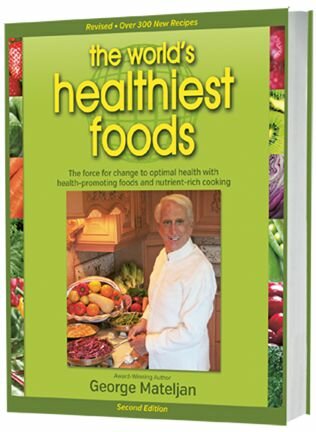
Order this Incredible 2nd Edition at the same low price of $39.95 and also get 2 FREE gifts valued at $51.95. Read more